Wednesday, March 28, 2012

Advice from Ben Franklin: Doctors should be competent in science

In 1766 Ben Franklin wrote letters of recommendation for the sons of two friends who were applying to medical school at the University of Edinburgh, which might have been the premier institution for studying medicine (or "physic") at the time.  Along with the letters he supplied the young students with some words of wisdom:
But you will be your own best friends, if you apply diligently to your studies, refraining from all idle, useless amusements that are apt to lessen or withdraw the attention from your main business.
Evidently, even 250 years ago the elder generation was concerned about their youngsters going off to drink and party at college.  More interesting to me is the following:
I recommend one thing particularly to you, that besides the study of medicine, you endeavour to obtain a thorough knowledge of natural philosophy in general.  You will from thence draw great aids in judging well both of diseases and remedies, and avoid many errors.  I mention this, because I have observed that a number of physicians, here as well as in America, are miserably deficient in it.
 How interesting that Franklin thought it necessary to explicitly draw the connection between medicine and science!  Medicine really must have been more an art (or pseudoscience) in that time.  I am sure he would be proud of the progress of modern evidence-based medicine, and would decry recent movements against it.

Monday, March 26, 2012

Ben Franklin's "Compleated Autobiography": First Thoughts

After the dismal story of Joseph Stalin's rise to power, I was hungry for a more uplifting biography, and one closer to home.  So, when I saw The Compleated Autobiography of Benjamin Franklin on the shelves of my audiobook shop, I eagerly picked it up.  Like a typical American, I have some nebulous ideas about Franklin as an accomplished statesman, inventor, scientist, and Founding Father of my country, but these perceptions tend to be changed by the long fermentations of history, spiked with the obligatory patriotic admiration.  But who was he, really?


Having just read Stalin's story, it will be interesting to compare these two historical figures.  Ben Franklin is something close to a demi-god to Americans, and it seems Stalin and his government worked to instill a similar opinion of himself during his rule of the Soviet Union.  Both men were revolutionaries with above-average intelligence and considerable charisma.  What about their personalities distinguishes these two towering figures of history?  What characteristics resulted in one being remembered as a brutally repressive dictator while the other persists as a beloved national hero?  It may seem naive, bizarre, or even offensive to make this comparison, but I'm trying to remain open-minded since my opinions of these historical figures are certainly colored by my education and culture.

In fact, it might not be fair to base my comparison on these two books.  Ben Franklin's autobiography was largely written by the man himself, then ultimately compiled and edited by historian and Franklin descendant Mark Skousen in 2007, more than two centuries after Franklin's death.  Young Stalin, on the other hand, is written entirely from the perspective of a modern Western historian who is not at all sympathetic to the dictator or his cause.  Certainly the tone of the two books will differ greatly with regard to their subjects.  Yet I do think that actions speak louder than words, and I hope that the actions and choices these two men made will provide a fair testament to their respective characters.

Now into the third chapter, I am already impressed by the clarity and versatility of Franklin's thought.  In one minute he is discussing tax disputes with the proprietors of Pennsylvania, and in the next, he is describing a musical instrument he invented or a chemistry experiment he conducted with Cambridge professor John Hadley.  Then, his mind will turn to a critique of a religious text and its moral implications.  Reading these words two and a half centuries later, Franklin's words still speak of a sharp mind tirelessly examining all aspects of the world around him, and an earnest desire to offer improvements when possible.

A modern replica of Franklin's musical instrument, the armonica.
His philosophy was clearly influenced by his Puritan upbringing.  He valued hard work, good deeds towards others, and a measure of sobriety (on returning to his home town of Philadelphia in 1762 he decried the rapid proliferation of taverns there in his six-year absence).  Yet he always had one foot firmly planted outside of his times, and a long stride he had.  While he must have been a racist by modern standards, Franklin, upon visiting a "negro school" in Philadelphia with a clergyman friend, observed that the children's "apprehension seems as quick, their memory as strong, and their docility in every respect equal to that of white children."  It took the rest of society two more centuries to come to that recognition of equality, and some still haven't caught on.  Similarly, when mobs of angry countrymen began brutally massacring innocent Native Americans in their midst, Franklin took initiative to condemn these attacks and secured the majority public opinion behind him.  Still, he didn't express any guilt over his countrymen taking the Natives' land in the first place.

I'm only just delving into this book, but so far it seems that Franklin was a remarkable person who deserves every bit of his reputation.  He was both an optimist and a realist, seeking to appraise every situation clearly and then make the best of it.  I may have to work harder to read between the lines for Franklin's faults... but in any case, looking forward to learning more.

Wednesday, March 21, 2012

Final Impressions of Young Stalin

Soooooo, I finally finished Young Stalin last week.  I took a few days off here and there since the story got a bit boring right around 1908-1913. Stalin had finished with his major bank robberies, leaving several years filled with short exiles, a long string of covert political party meetings, and an equally lengthy list of brief love affairs.  Hence, this section was riddled with unfamiliar Russian, Georgian and otherwise Slavic or Caucasian names that make my brain hurt.  I eventually persevered, and even if I’ve forgotten many of the details, this book taught me a great deal about Stalin’s personality and the events of his early life that poised him to become one of the world’s most brutal dictators.

Montefiore’s thesis in this book is that Stalin was far from the mediocrity that his Bolshevik peer Trotsky claimed; rather, he possessed a singular combination of incisive intelligence, quiet charisma, complete confidence in his own convictions, and utter lack of empathy that combined to propel him to the pinnacle of Soviet power for three decades.  The memoirs of his political peers (and rivals, many of whom would later fall victim to his targeted killing sprees of the 1930s) testify to his intellect, gravitas, and pigheadedness.  And, as an old man, Stalin himself reflected that there were only two people he really loved in life: his first wife, the dressmaker Kato (Ekatarina Svanidze) and his mother, Keke (Ketevan Geladze).  Once Kato succumbed to what was probably typhus, he stated that “with her died my last warm feelings for humanity.” 


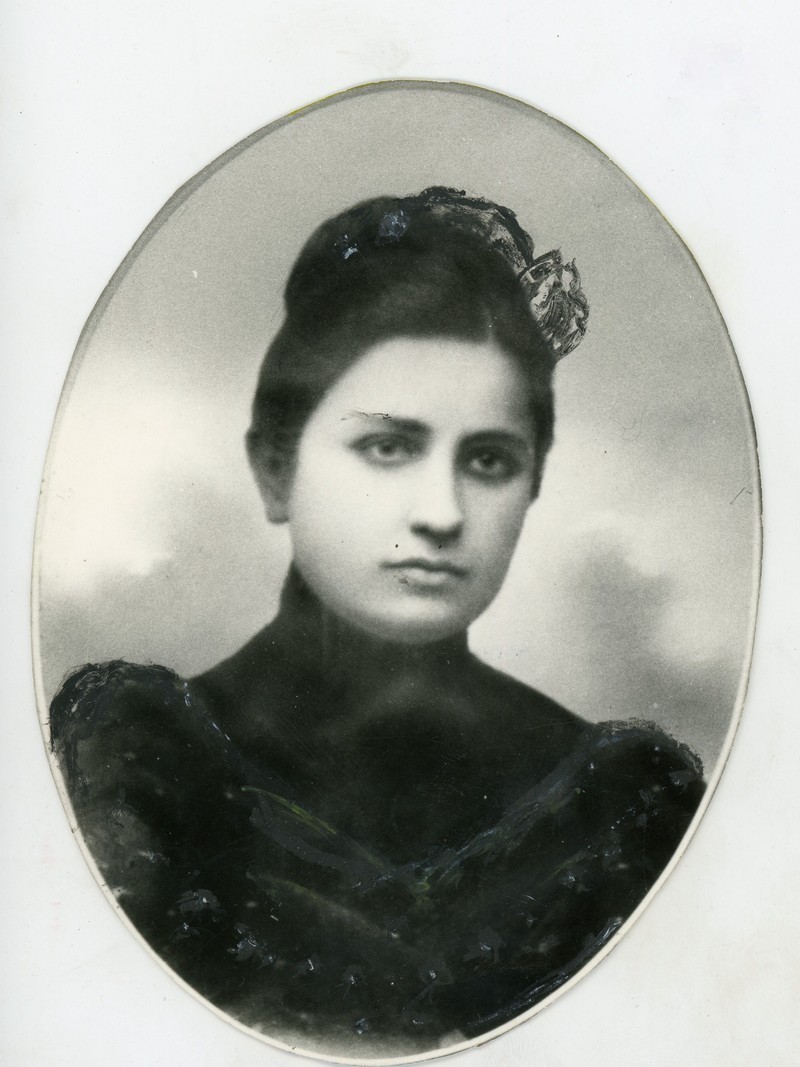
Keke Geladze (left) and Kato Svanidze.  The portrait of Keke is by Isaak Brodsky.

I find the role of Kato in his life particularly fascinating.  It fits neatly into the archetype of the prodigy turned evil by the death of his beloved (ala Darth Vader).  On the other hand, Stalin was wedded first and foremost to the revolution, and had committed violent atrocities in its name well before Kato died.  He might well have become the dictator Stalin even had his Kato survived.  Furthermore, his love for her didn’t stop him from later murdering most of her surviving immediate family, perhaps because they had expressed disapproval of him and even blamed him for causing Kato’s death through neglect.  Probably his disregard for the value of human life had deeper roots, extending all the way back to his abusive upbringing in a society full of belligerent drunkards.

Of course, bloodthirsty sociopaths can be found in all societies at all times.  One needs only look to serial killers and terrorists to find examples of this.  The only difference with Stalin was one of historical accident: he had the will and opportunity to enforce his psychosis on millions.  It’s interesting to note that more moderate Bolsheviks were also vying for power after the 1917 revolution – those that Lenin called the “tea drinkers,” the conciliatory intellectuals that wanted to unite with the opposing Mensheviks.  If these had gained power, perhaps the legacy of 20th century Communism/Socialism would have looked much different.

Moreover, Stalin could not have ascended to power without Lenin, his well-to-do mentor and colleague.  In contrast to the fatherly portrait some have painted of Lenin, Montefiore points out that at times Lenin was more extremist, less conciliatory, and more committed to underhanded gangster politics than Stalin.  In the young Georgian, Vladimir Lenin saw a man who could get the job done by whatever means it took.  And to both men, all means were justified in achieving their goal.  As Stalin told one Menshevik acquaintance, “a lie always has a stronger effect than the truth.  The main thing is to obtain one’s objective.”  In Stalin’s view, this clearly extended far beyond the world of words, as is revealed by his history of bank robbing, incitement of riots, and generally wanton killing that only accelerated late in his career.

Stalin (left) and Lenin (right) in 1919, a few years after the revolution.  They seem like nice guys, no?
Regarding the dictator’s atheism, Montefiore says little beyond the role it played in his early schooling at the theological seminary in Tiflis (Tblisi).  Stalin’s reading of Darwin’s On the Origin of Species as a teenager had a strong impact on him, and seemingly prompted his initial questioning of Christianity.  “We’ve been deceived,” he told one peer at the time.  His introduction to the works of Marx, Plekhanov and others would come later, along with his conversion of many of his classmates to the cause.  On my reflection, it seems the main role of his atheism was to prime him to reject his teachers’ authority and gradually replace the Christian dogma with that of Marxism (or at least his own version of it, imbued at first with Georgian nationalism and later with many of Lenin's ideas).  Would there have been a Stalin had the young Iosef not read Darwin?  It’s hard to say; clearly he was a voracious reader and probably would have come across Marxist writings in any case.  Still, ironically, had his mother not worked doggedly to support his seminary studies, Stalin would likely have worked as a cobbler in his father’s workshop, and Soviet history might have looked quite different.

I can’t conclude without mentioning his five-year exile in Siberia.  Stalin spent the time between 1912 and 1917 in the tiny village of Turukhansk, which consisted of three extended families living in small huts.  It was completely isolated from civilization; the only means of transit in winter was by reindeer-propelled sleigh on the frozen Yenisei river, and in summer, by boat on the same.  It was here that the 34-year-old Stalin seduced and married a thirteen-year-old girl (scandalous even at that time) named Lidia, who bore him a son that he promptly abandoned.  In any case, the frigid winters and self-reliant ways of life here had a lasting impact on Stalin.  Into old age, he recounted increasingly impressive tales of his hunting exploits there, and it is said that he retained the Siberian habit of snacking on bits of frozen fish for the rest of his life.

Turukhansk (A), where Stalin spent several years in exile. (Swiped from Google Maps).
All in all, Young Stalin provided a fascinating glimpse of the randomness of history.  It is incredibly ironic that a revolution that was supposed to give power to the proletariat only gave rise to a new monarchy, freshly imbued with a steel-hearted utopian vision to impose on the people it was supposed to represent.  Circumstance granted the megalomaniacal Iosef Dzhugashvili a window of opportunity, and he took it.  Sadly, such reigns of terror can and probably will happen again... all it takes is political instability and an opportunistic regime with the power to oppress its people.  Which makes me view the recent uprisings in the Middle East, as well as my own government’s steps towards tighter surveillance of communications, with greater anxiety.

Friday, March 9, 2012

Can Blogging Assignments Improve Science Education?

Image pilfered from Pitt County Schools.


I'm fortunate that my institution has large support centers dedicated to improving students' and faculty members' skills in writing (the Sweetland Center) and teaching (Center for Research on Teaching and Learning).  Today, they jointly hosted a workshop entitled "Blogging in the Classroom," which I attended. Coming from a field in the natural and physical sciences, I expected to be a fish out of water.  Surely a workshop on blogging as a teaching tool would be intrinsically catered to instructors in the writing-heavy humanities and social sciences?  I actually considered skipping it, since I have plenty of data to analyze from a recent round of experiments.

Am I ever glad I went!  The panelists were three well-spoken instructors from the disparate fields of history, writing and environmental science.  It was the presence of this latter speaker, Bill Currie, that convinced me that  blogging might be a valuable tool in a science classroom.  There are a lot of ways to implement a blogging module in a course, but Dr. Currie uses it as a platform for public posting of formal essays by students as part of their coursework, i.e., an alternative to a traditional term paper.  Students are invited to post (civil!) comments on each other's entries, and are graded for both their own entries and their reactions to others.

Coming away from this workshop, I can see the following as possible advantages of blogging assignments.

1) It puts the direction of learning into the hands of students, rather than solely professors and grad assistants.  Rather than listening to the lone voice of a professor, they have a role in shaping their own learning.  In this way, blogging plays a role similar to traditional oral presentations, but uses less class time and exercises a different skill set.  It might also allow more in-depth discussion than classroom presentations.  Of course, student-run learning comes with its share of caveats, but perhaps some form of instructor (or peer!) review could be implemented to rein in factual errors to some extent.

2) It provides a safe(r) forum to exchange ideas without fear of sounding ignorant.  If students are given the option to post entries and comments anonymously (that is, anonymously to everyone except the professor), the panelists noticed that students less inhibited in discussing controversial topics.  I bet it would also encourage them to ask for clarification of fundamental points of scientific arguments without embarrassment.

3) It provides an incentive for students to showcase their best critical thinking and writing.  After all, many of these course-run blogs are public.  If your essay is being read not only by your instructors, but also by your peers (and potentially your grandmother, as one panelist put it), you have a stronger motivation to put forth your best, most polished work.

4) It enfranchises students and prepares them for deeper participation in the democratic forum of the internet.  This seems to me a very valuable skill for anyone wanting to shape our increasingly interconnected society through their ideas.

5) It provides real-world, public writing experience.  This should make for a nice resume item, and possibly "open the valve" of open-ended communication for many students, as panelist Naomi Silver put it.

Since there is such a heavy emphasis on learning the core material in my field (chemistry), any writing and blogging assignments would have to take a backseat to more structured conceptual learning and problem solving.  However, science professors have already been incorporating writing assignments into their curricula for some time.  In my intro biochemistry course, for instance, my prof had us summarize one or two peer reviewed articles in our own words, discussing the main findings and any strengths or weaknesses of each study.  This could easily be translated to a blog format, with the added advantage of promoting discussion (and, one hopes, a sense of relevance!) of the topics.  I also expect the anonymity of blogging via usernames would make students less ashamed to admit their misunderstandings about a topic.  This might be a convenient way for future scientists and medical professionals to "break into" the primary literature without worrying about what they think they're already supposed to know.

Lots of exciting possibilities here... I'm so glad to be living in the information age!

Thursday, February 23, 2012

Disposable personal genome sequencers may be available by the end of the year for under $1000

Last week, Nature published a story about portable genome sequencers under development by a UK company called Oxford Nanopore Technologies (US company Ion Torrent Systems is developing its own technology in parallel).  The devices work by electronically reading the "letters" of the genetic code as single molecules of DNA pass through tiny nanometer-sized pores in a membrane.  The company is developing pocket-sized disposable devices to accomplish this for around $900 apiece.  Within a year, you may be able to decode your whole genome for a price cheaper than my family's first computer.

A prototype of the MinION, a personal genome sequencer.   Yes, that's a USB plug.  Oxford Nanopore Technologies.

Its error rate is still high (4%) but the company hopes to reduce this error to less than 1% by the time the device launches.  In addition, thus far they have only reported the sequencing of viral genomes, which are orders of magnitude smaller than the human genome.

Regardless, this is a very promising start.  The technology has been in development for the better part of two decades, but this would be the first practical application of it.  With so many known genetic markers of diseases, this kind of device could help usher in a new era of more personalized medicine (as well as a slew of possible ethical issues).

Tuesday, February 21, 2012

Genesis of a Tyrant: Young Stalin


I am not a history buff.  Frankly, I never really saw the point.  Sure, there is the standard defense that it gives us perspective, that knowing the past gives us insight into the future.  But even a cursory glance at the past several hundred years of history seems to validate the quote attributed to Hegel, that “We learn from history that we do not learn anything from history.”  It’s difficult to derive any inspiration or hope from stories of war upon war, conquest after conquest, and the replacement of one form of oppression with another.

So, I’m branching out a bit with the audiobook Young Stalin by Simon Sebag Montefiore.  I chose Stalin’s particular tale for a few reasons.  First, in contrast to the other great tyrant of the 20th century, I know next to nothing about Stalin.  This is not surprising, since my K-12 curricula gave me a solid foundation in American history but emphasized world history too little (really only in the context of a single class on Western Civilization in 7th grade).  Second, and for the same reasons, I don’t know much about the history of Russia, which seems very alien and exotic to me.  When I hear terms like Bolshevik and Gulag thrown around, a fog of ignorance creeps over me.  Third, as I often hear religious conservatives cite Stalinism as the inevitable endpoint of liberal secularism, I want to understand for myself the relationship between Stalin’s political philosophy, his religious beliefs and upbringing, and the horrid brutality of his regime.


After listening to the prologue and the first couple of chapters, I’m already learning all sorts of interesting tidbits about the future dictator’s early years.  For instance, I never knew that he had grown up in Georgia, the same country that Russia invaded in 2008 – indeed, some of his relatives were from the very South Ossetia region upon which the 2008 conflict centered.  Or that his surname at birth was not Stalin, but the very Georgian name Dzhugashvili. Or that his father was a handsome and successful cobbler-turned-drunkard who savagely beat the young Iosif (Joseph) and his mother in fits of jealous inebriated rage, allegedly desensitizing Iosif to violence and teaching him to hate at a very young age (NOTE: My subsequent reading of Steven Pinker's work, particularly The Blank Slate, calls this heavily nurture-ist perspective into doubt).  Or that his mother dearly cherished him after losing her first two babies to illness, yet exerted a stern disciplinary hand (i.e., she beat him to keep him in line... apparently, it didn't work).  Or that he grew up in a culture rife with gang violence and male bravado, influenced by militant revolutionaries and romantic tales of righteous despoilment of the ruling class.

I'm just scratching the surface, though.  It will be interesting to see how a sensitive, flower-loving little boy was transformed into such a brutally oppressive dictator.


Saturday, February 18, 2012

Talent “ex nihilo”: How brain damage can make people more musical

When you think of brain damage, what effects come to mind?  If you’re like me, probably mental and physical handicaps – aphasia, amnesia, perhaps loss of coordination or personality changes.  As I finish Musicophilia, one of the standout surprises for me was that brain damage can sometimes add function… or so it seems.

Owing to the book’s focus, Dr. Sacks focuses on several cases of brain damage or disease contributing to “hypermusicality,” an enhanced appreciation of and/or talent for music.  The most striking example comes at the beginning of the book, where he describes a patient who became obsessed with music after an encounter with a bolt of lightning (see what I did there?).

Image credit: David Selby
The patient, Tony Cicoria, apparently had no major adverse health effects apart from burns to his face and left foot as well as some temporary sluggishness and memory loss that lasted a few weeks.  However, Circoria had a sudden irrepressible urge to learn piano music, despite having virtually no interest in performing music in his forty or so years.  He bought recordings of Ashkenazy playing Chopin and adored every one.  Around that time, a family babysitter needed somewhere to store her piano, and this was just the ticket he needed to start making music himself.

Then, he began hearing music in his head.  “It’s like a frequency,” he said, “a radio band.  If I open myself up, it comes.  I want to say, ‘It comes from heaven,’ as Mozart said.”  After the lightning strike, he also became hyper-religious, believing that he had been saved for some purpose, and that purpose was his music.

This incessant influx of music needed an outlet, and he began composing at every available opportunity.  It totally possessed him during every waking hour, and his wife was none too pleased.  (I can relate: when I go through obsessive piano binges, it can certainly intrude upon time together with my wife!)  In the intervening years, Cicoria has developed a veritable musical career, presenting his compositions first at informal recitals and later at more formal concerts.  All this despite having only a handful of piano lessons as a young boy, about thirty years before.

So, after being assaulted by several thousand amps of electricity, Cicoria’s brain was not only unimpaired, but revealed talents and interests that he never possessed before!

This sort of phenomenon is not restricted to those struck by lightning.  Sacks also describes several patients with frontotemporal dementia (FTD, or Pick’s disease), a neurodegenerative disease that is similar to Alzheimer’s except that it specifically affects the front and side portions of the brain.  Here is an image of a brain from a patient with advanced FTD:

Note the shrinking of the gyri (folds) of the brain towards the front, on the right.
Unlike Alzheimer’s, the first symptoms of FTD do not involve memory loss, but changes in personality and loquacity.  The symptoms of FTD vary a lot, but in general the patients become more outgoing and less inhibited, which is not surprising since the frontal lobe is involved in suppressing socially questionable behaviors.  Sacks discusses some patients that begin to spontaneously burst out into song, and even some that suddenly develop extraordinary gifts of composition out of the blue.  Bruce Miller described one such man who began composing music at the age of 68!  Sack speculates that these probably don’t represent entirely new behaviors of the brain, but result from the de-inhibition of existing thought patterns that are then free to flourish.

This reminds me of a few occasions I've had to speak French with native speakers while mildly intoxicated.  With a few glasses of wine in my system, I was actually more fluent.  It was as if my conscious brain gave way to a more fluent unconscious self.  Unfortunately, sobriety brought the return of my more typical halting, clumsy manner of speaking.  I have never experimented with psychoactive drugs, but I would not be surprised if such de-inhibitions were responsible for the bizarre creative visions of some drug-using artists and religious cults.

Sadly, most patients lose their newfound abilities as the FTD progresses further.  Many remain ebullient and enthusiastic, but their semantic memories usually begin to fail.  One elderly man would gaily sing “We Wish You a Merry Christmas” but could not tell his doctor precisely what Christmas was.  As Sacks put it,
The musical or artistic powers that may be released in fontotemporal dementia or other forms of brain damage do not come out of the blue; they are, one must presume, potentials or propensities that are already present but inhibited – and undeveloped.  Once released by damage to these inhibitory factors, musical or artistic powers can potentially be developed, nurtured, and exploited to produce a work of real artistic value – at least as long as frontal lobe function, with its executive and planning powers, is intact.  In the case of frontotemporal dementia, this may provide a brief, brilliant interlude as the disease advances.  The degenerative process in frontotemporal dementia, unfortunately, does not come to a halt, and sooner or later, all is lost – but for a brief time, for some, there can at least be music or art, with some of the fulfillment, the pleasure, and joy it can so uniquely provide.
One must wonder, finally, about the “Grandma Moses” phenomenon – the unexpected and sometimes sudden appearance of new artistic or mental powers in the absence of any clear pathology.  Perhaps one should speak of “health” rather than “pathology” here, since there may be, even at an advanced age, a relaxing or release of lifelong inhibitions.  Whether this release is primarily psychological, social, or neurological, it can unleash a torrent of creativity as surprising to oneself as it is to others.
What hidden creative potentials lie in each of our brains, ready to burst out but inhibited by the tyranny of rational thought?  Still, I’m not eager to get struck by lightning or stricken with dementia to find out.